
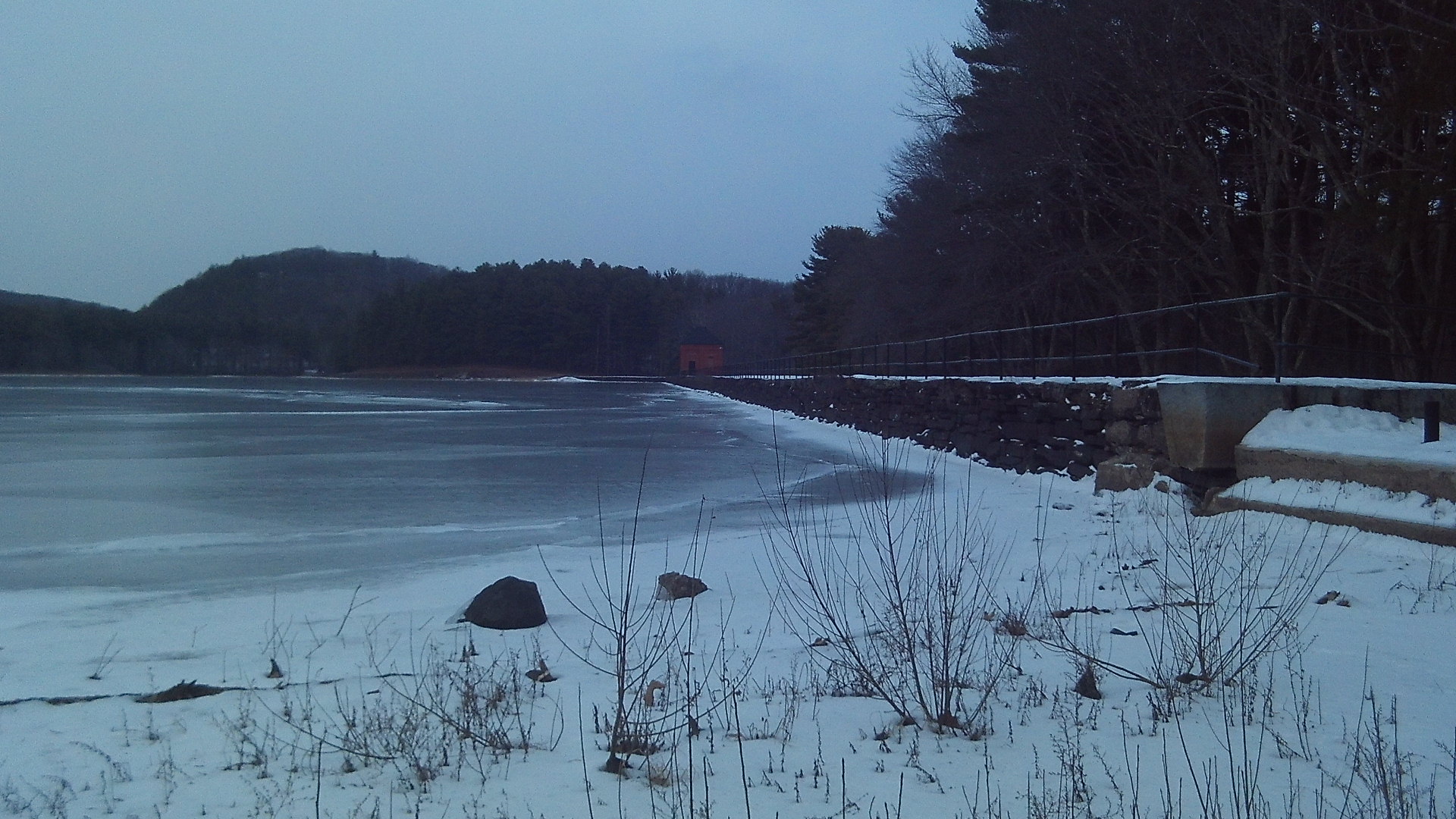
Whiting Street Reservoir Dam
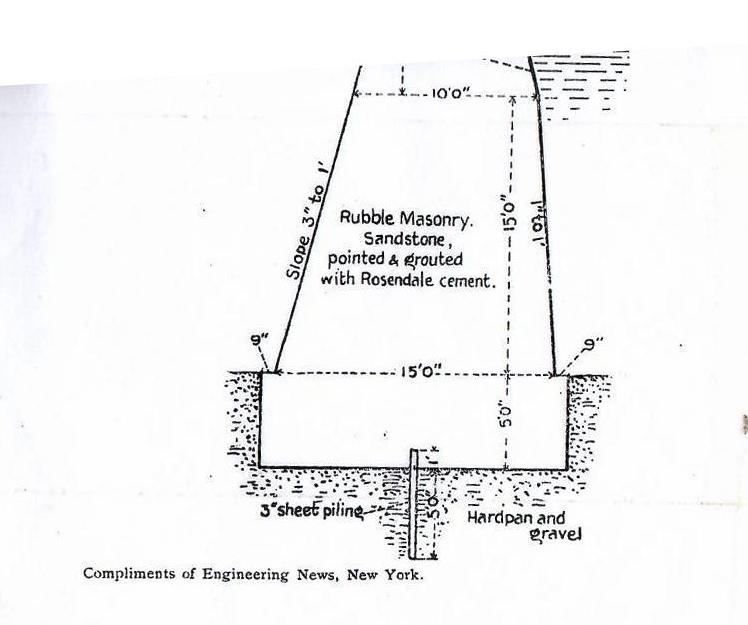
The dam is 1773 feet long, 21 feet high, and is made of sandstone and Rosendale grouted cement. The dam is made of 12 thousand perch of stone. It rests on bedrock but with some gravel. The reservoir has half a billion gallons of water and covers 114 acres. Its watershed is 1.5 square miles.
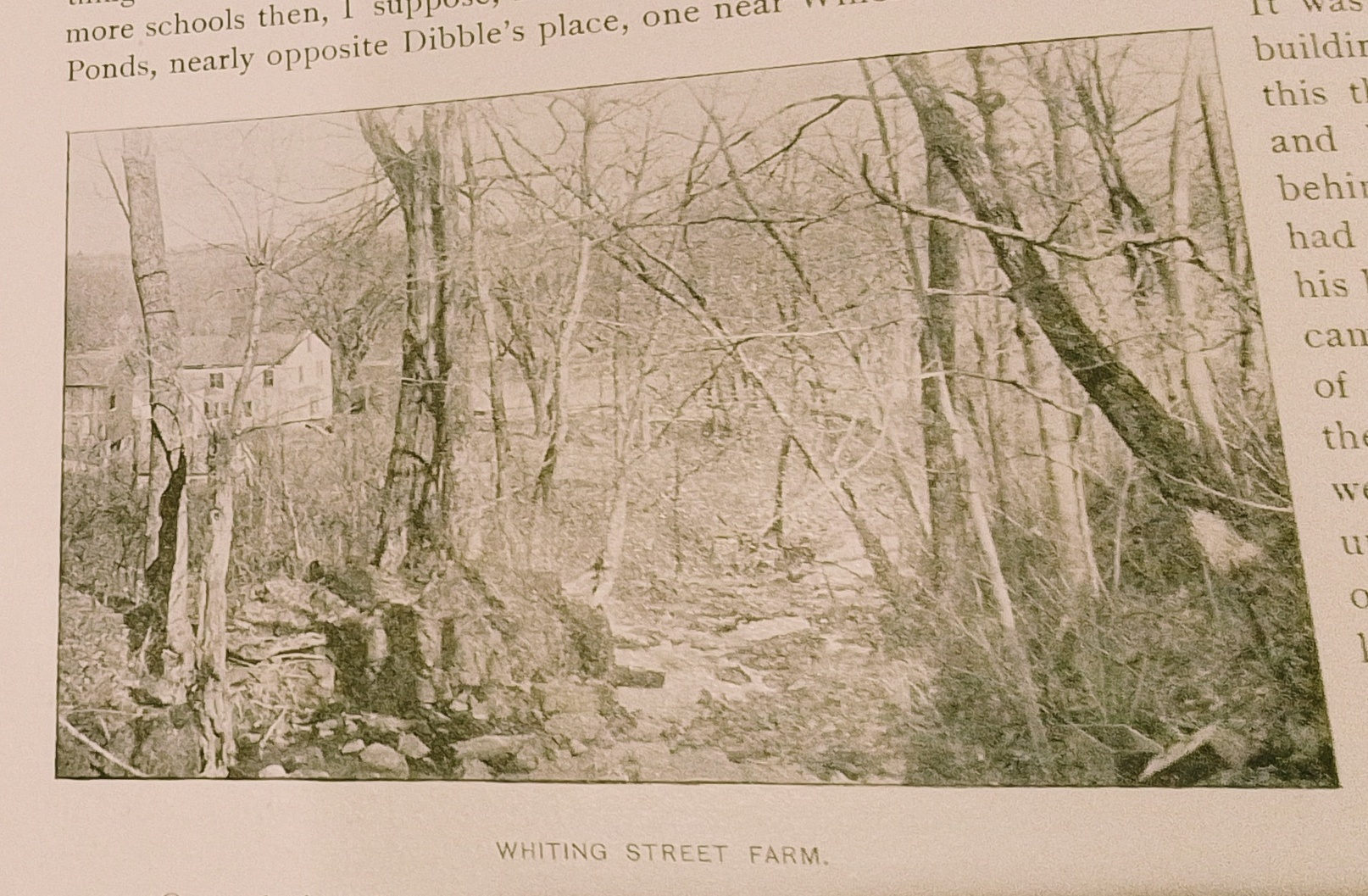
The land for the reservoir was taken in 1884. (LOCATION) The land was in Northampton but the City of Holyoke took the land from the heirs of the Whiting Street family. This family was not happy so they started a court case – Land of Whiting Street Brook v. Estate of Whiting Street. There was also an injunction against claims on Easthampton Road. All was settled in 1889. To dam a brook you also need permission and so by 1888 the Holyoke Water Works had permission from the County Commissioners for Hampshire County. Any land after that was slowly purchased by the Water Works.
In 1887 the year before the dam was started the estimated cost of the dam was 60 thousand dollars with a height of 23 feet and length of 1850 feet. The Delaney Brothers built the Whiting Street Dam.
For the most part, the waters have been kept clean. The trees were removed from the pasture that formed this reservoir but the stumps were left behind.
There was a bacteria scare on 2 May 1944 at the reservoir and the brook. Scum was found on the water. The water was tested to determine the cause but the result was inconclusive (12 May 1944). Copper sulfate was put into the water to kill the bacteria. On Jarvis Avenue there are two dumps both alongside the western edge of that road – one of those dumps was still being used (since 1939). The Roaring Brook goes by that site so membranes have been used to separate the dumps from the brook. These membrane dikes were put up in 1944 and 1945. These worked very well where other attempts had failed so much so that in 1945 the reservoir is chemically clean. Also water near the dumps was collected in drainage ditches from an area in the hills west of the damps. Then the ditches lead to the north. Constructed was 250 feet of ditch and 40 feet of 18 foot culvert. Lastly, a duck pond and a swamp along Jarvis were filled in. These improved drainage schemes helped 50 acres of the watershed of the Roaring Brook from being polluted.
Since 1907, Whiting Street Reservoir serves both a high service and a low service domain of Holyoke. It does this by the position of the pipes. It served the Highlands (from Dwight Street over to the north) as a high service and the Downtown as a low. In 1902 the dam had its one and only leak but it was quickly filled in with gravel. Starting in 1912 a new pipeline was put in leading to Smith’s Ferry. In April 1913 the reservoir finally feed water to Smith’s Ferry. This was a promise that the city had made to the neighborhood since before its annexation of Smiths Ferry. The city now provided all services to the neighborhood.
The reservoir area is beautiful and so enjoy your stay.



Fun facts:
There are dinosaur footprints on one of the last flagstones to the north on the top of the dam.
Fishing was allowed in the reservoir in 1946 and 1947. For this reason and more the reservoir was considered to be a recreational center.
Rainfall amount at Whiting Street Reservoir.
Height of the water at the dam
In 1986 a turbidity problem in the surface water hit the reservoir that forced it to close soon after (in 1989). The Holyoke Water Works would have had to filter the sand and that is expensive.
Sanborn map analysis:
Side trip:
The Whiting Street home is down Brookwood Road.
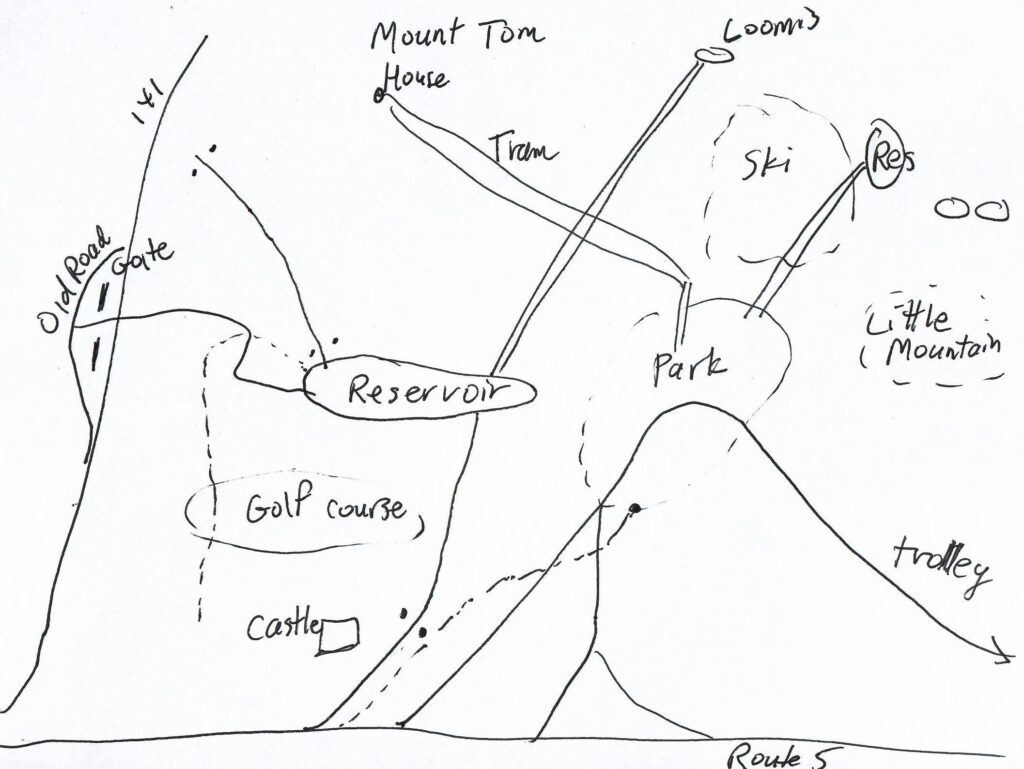
Also the end of Roaring Brook is down that road and also appears at the edge of the Mountain Park old gate.
Thanks for going on this wonderful trek around the Whiting Street Reservoir.