

Old Gate at Whiting Street Reservoir
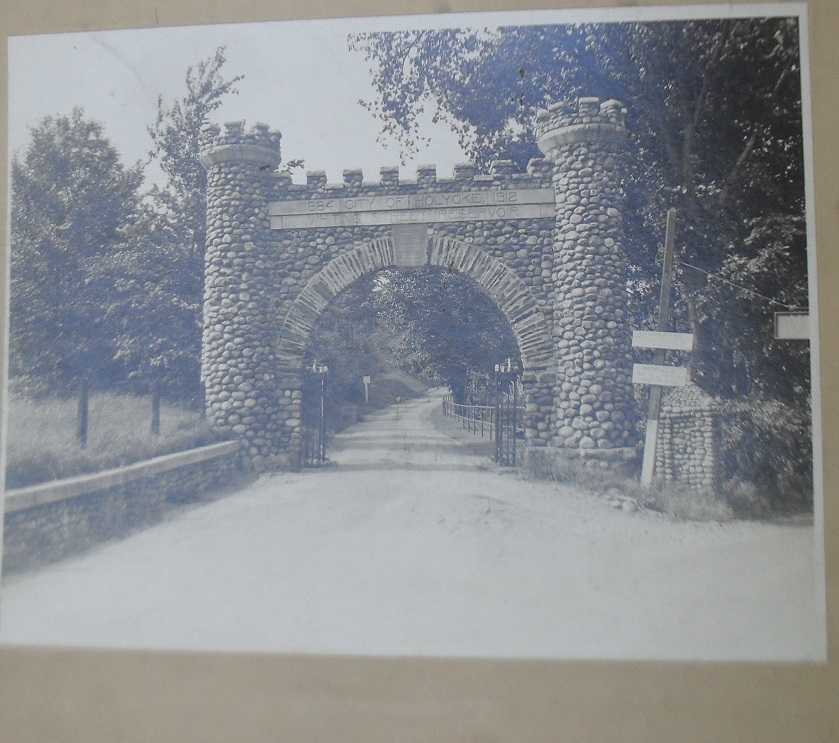
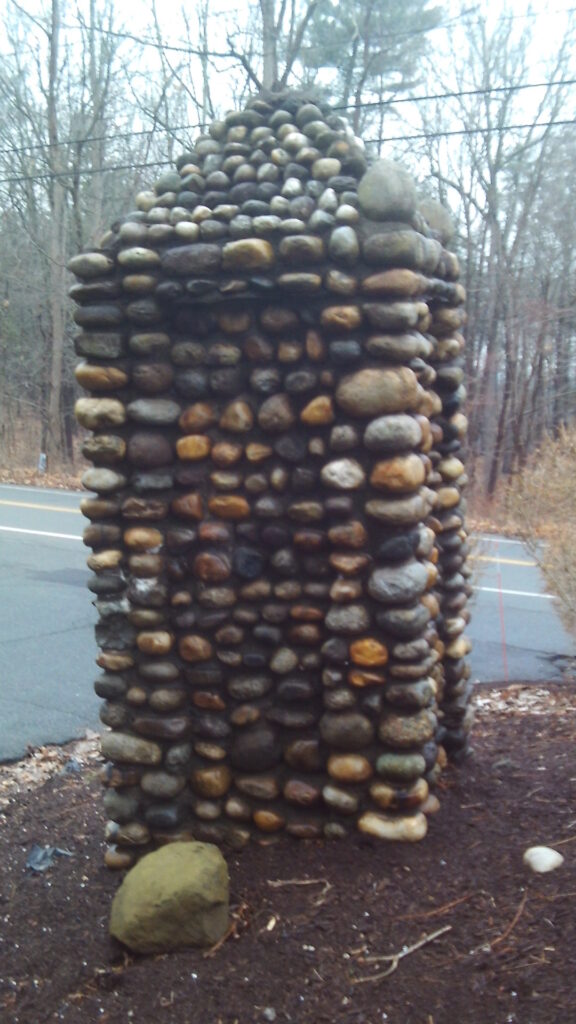
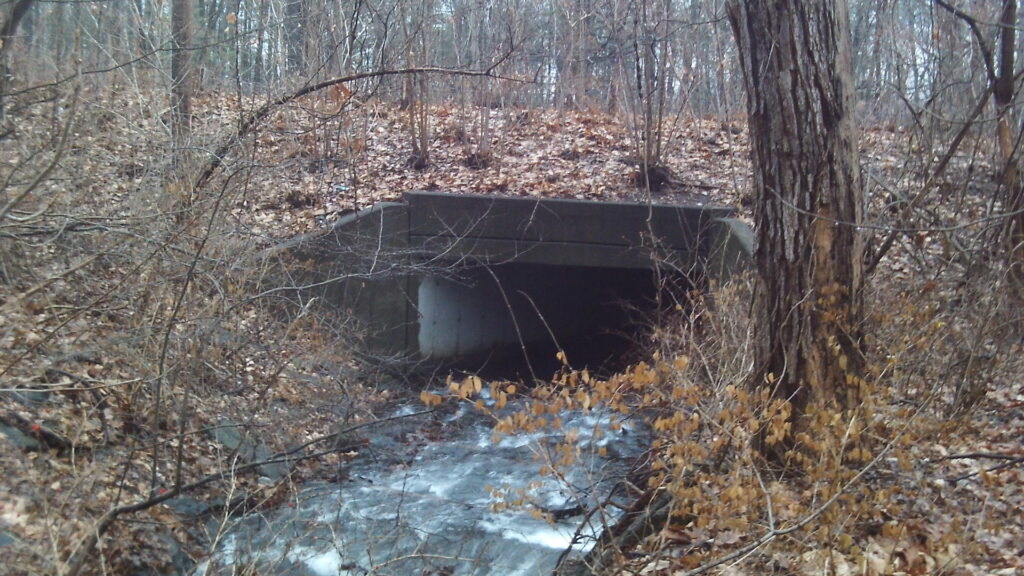
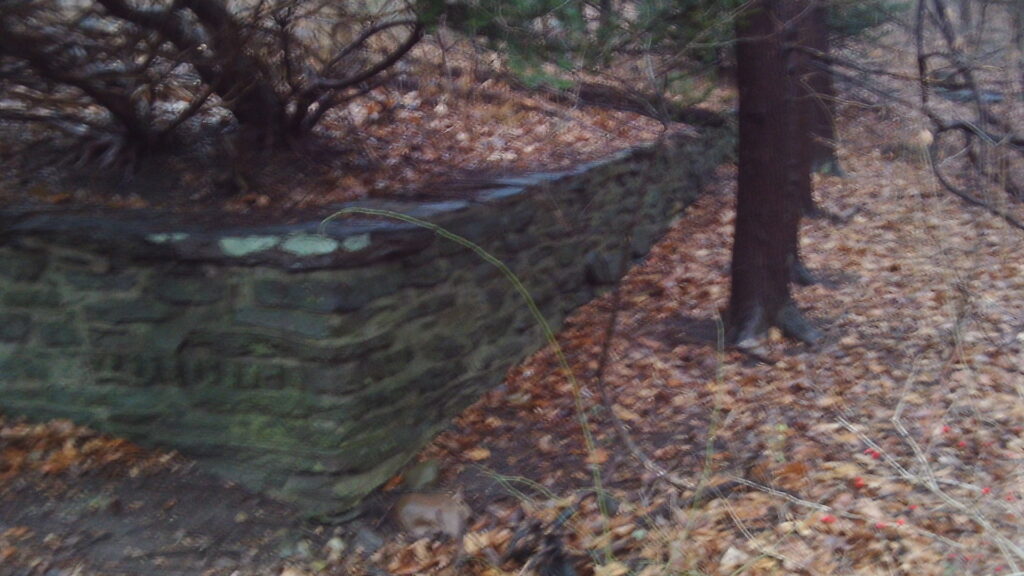
At the crossing of Kenilworth Road and Mountain Park Road there is an old road leading west. (In the inset map just above, it is the black line above the upper RED line and is marked “Road to Reservoir”). (LOCATION) It starts about 70 feet into the driveway of the Kenilworth Castle Condos.) This is the remnant of the entrance to Whiting Street Reservoir. It once led to the reservoir but in 1963 when the interstate highway was put in, the Reservoir Road was partially taken out. The Kenilworth Castle was to the south. The stream nearby is the end of Roaring Brook which soon crosses Northampton Street and empties into the Connecticut River. This entrance had a large castellated gate from 1912 to 1963 but it has mostly been removed.
In 1914 an iron pipe fence lined both sides of the road from this gate to the reservoir. In 1918 this entrance road was paved with bituminous macadam. The iron gate across the road was added in 1919. By the next year 1920 the gate was being used a lot to restrict driving whenever needed.
Part of a surface pump and some walls are still here. This road is the property of Holyoke Water Works so you may walk up it but it only leads to a fence on the interstate highway. Another dirt road leading north was constructed in 1915 to lead to Mountain Park. This road was paved in 1928. (On the inset map, this is the UPPER RED line.) The tar road that you drove in on, going to the park and reservoir was made in 1965. (On the inset map, this is the BLUE line.)
In 1912 also a pipeline was lain from the castle area near this gate to the Mt Tom Country Club. This would bring water to the golf course for the first time.
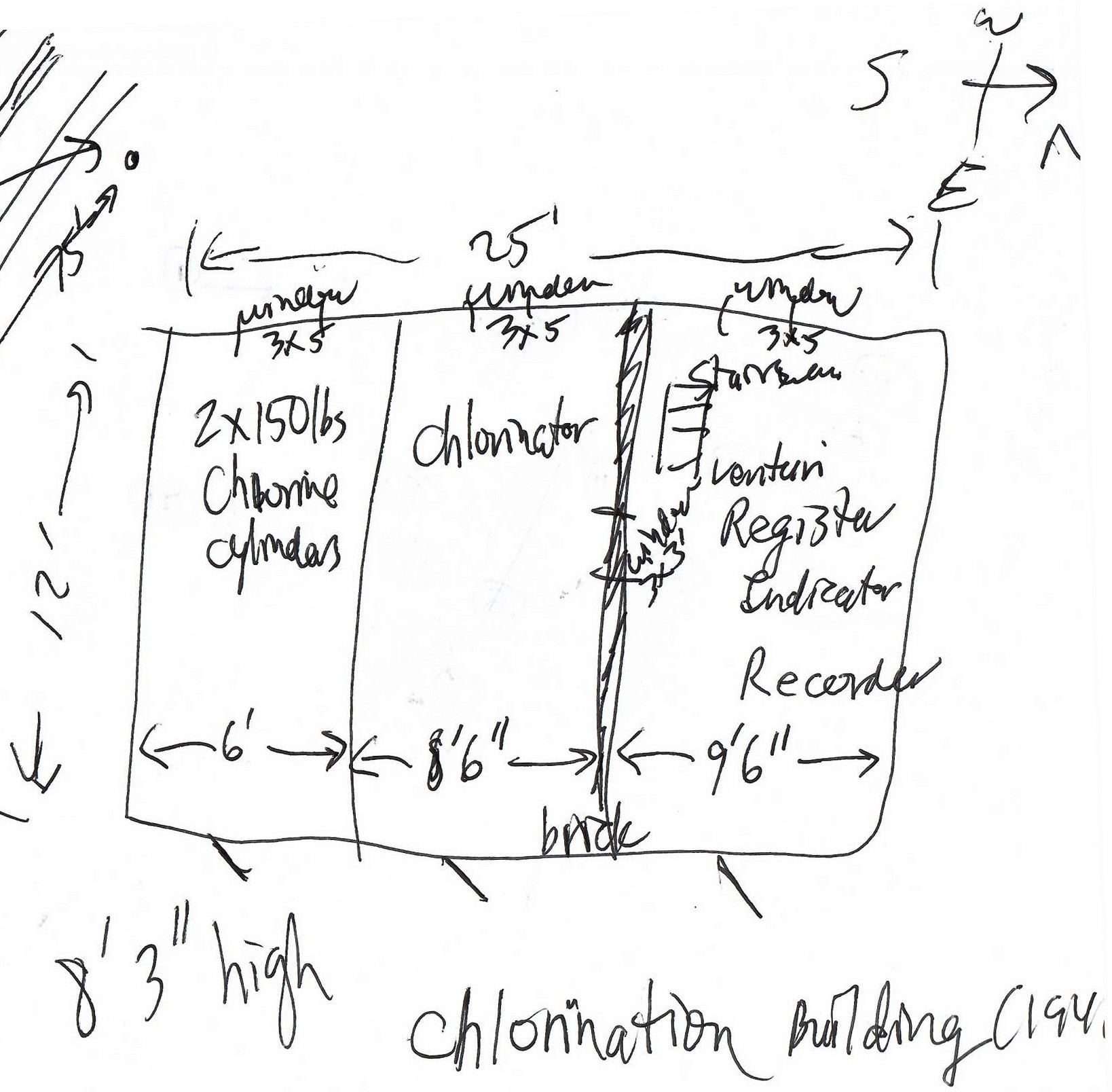
The first chlorination plant of two at Whiting Street Reservoir was put in place in January 24 of 1941 having been started in 1940. It was 100 feet north of this gate. It was easterly of the Water Works road (between the two old roads that are described above). See the schematic above for a look at its design. It had a Ross hydraulic pump that injected chlorine into the water. (In 1941, 25 pounds of chlorine was used every 24 hours.) The equipment could hold 1 ton of chlorine at a time so the tanks must have been large. The plant included a Venturi meter (January 7 1`941) and a Ventilator both of which were stored in the basement in order to stay clear of the chlorine. The plant was 25 feet long and 12 feet wide. At 8 feet 3 inches high, it also had a cellar. Each of the three segments had doors and each had a window. The northern section had a stairway down to the cellar.
This area had a large platform for a floral and bush display and the chlorination plant was to its western edge.
Christine Hurlburt was found murdered in 1968 close to this spot. FINDAGRAVE

| gateway | still there and see also image to the left | upper Roaring Brook after it comes out from the interstate area | |
 |  |  | |
| garden area | flower plot on top | ||
 |  |