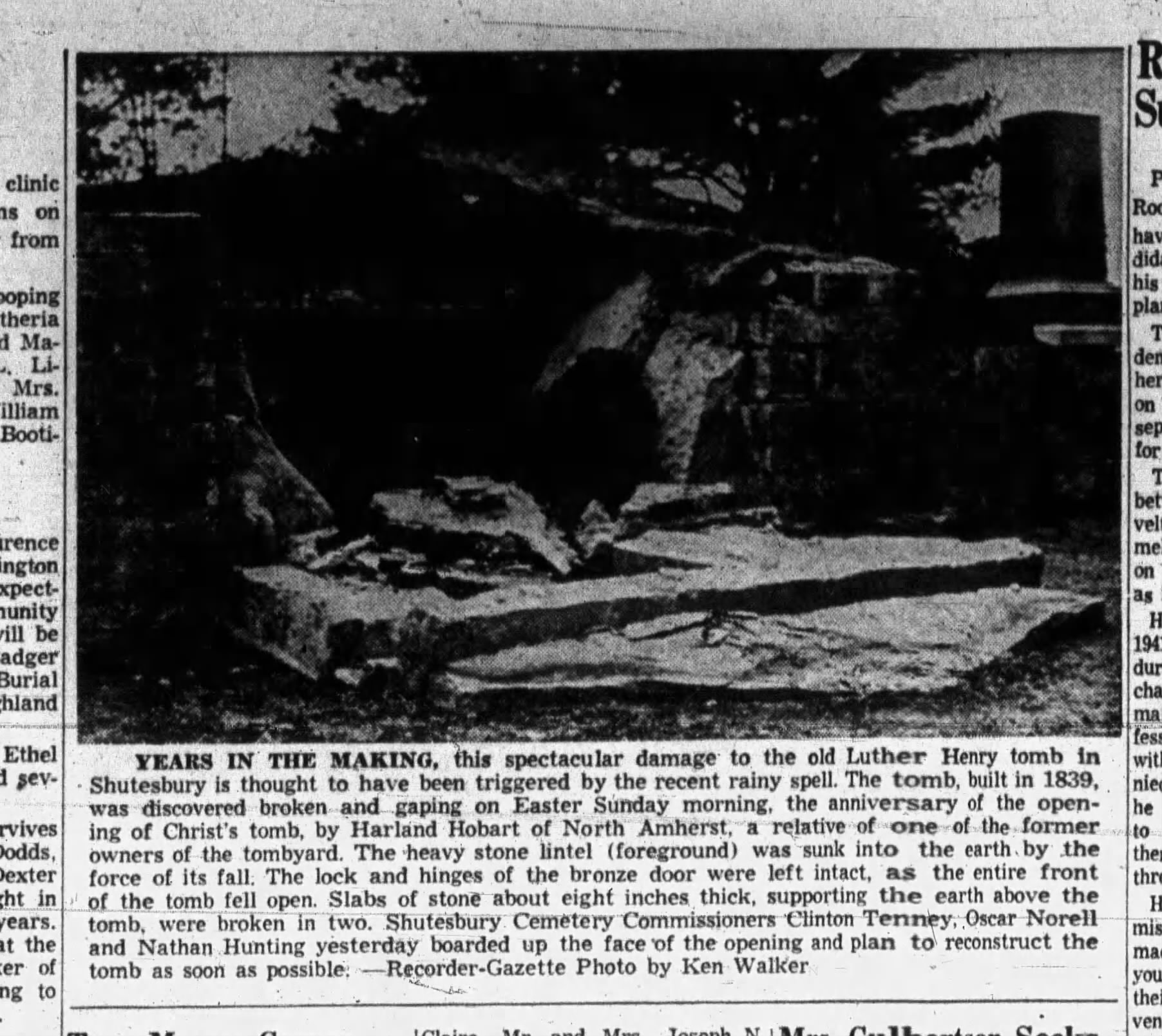
The Luther Henry Tomb Yard abuts the West Cemetery. The town took over the yard in 1954. Burials started there in 1820. The Luther Henry Tomb is from 1839. The west half of the cemetery is for the Luther Henry family and the east half for the Samuel Henry family.
Fort Warren is on Georges Island in Boston Harbor. The island belongs to Boston Massachusetts. Started by Lt Col Sylvanus Thayer (1785 to 1872) in 1834 it was ready by the Civil War. It served as a prisoner of war camp during that war. There was a memorial stone on the grounds of the fort. IMAGE
The memorial honors the 13 individuals that lost their lives at the prison. It also has a nice statement about the gravestone. The conditions were so humane that even though 1000s of prisoners would pass through its gate only these 13 died. Contrast this to the Andersonville Prison in the south. Shortsighted progressive politians took the memorial down in 2017 and it is now in storage at the Massachusetts Archives. This was during the 2017 rampage on southern statues, memorials, and monuments. Sure some statues, memorials, and monuments in the southern states were put up out of spite and should be or have been taken down. This monument was not placed up in spite.
The North of the late 1860s were vastly more respectful of the South than Massachusetts of the present day can be. There are hundreds of Southern military men that are buried around the state with nice made gravestones and military decorations. Hopefully, these will not be found and removed.
The North post-bellum was very conciliatory to the South. Much was done to repair the geographical regions. Many statues, memorials, and monuments went up very quickly in this period to honor the war deaths. Also to honor the people that helped to heal the Union. Many cemeteries and town commons have such monuments. Just because the men who died at the fort here were on the Confederate side does not mean that they should not be respected. The were respected during their stay at the prison camp and should be respected again.
At first the men were buried on the west side of the island. They were moved to the Post Cemetery at Fort Winthrop Massachusetts. Most of the men were then moved once again and buried in the Deer Island Cemetery in Winthrop Massachusetts – FINDAGRAVE Their last move came in 1939 when they were moved to Fort Devens’ Post Cemetery in Devens Massachusetts. Ten of the 13 men are without gravestones at their final resting place. It is typical that a set group that are or once were buried as a group would have a monument within a cemetery devoted to them.
Thus the monument stone should either be returned to Fort Warren or brought to the cemetery at Fort Winthrop or to the cemetery at Fort Devens. This would be the respectable act. It would also help both young and old learn about history. Until that act happens, let this page stand as a solemn memorial to those men.
East Wilbraham Cemetery is from 1776. Its first burial stone left is from 1779. It is at 3244R Boston Road near Three River Road and Silver Road and also close to the Massachusetts Turnpike. It once was called the Old Sodom Cemetery. This is a former Baptist cemetery as is the Glendale Cemetery. It was founded by the First Baptist Society of Wilbraham. There are many Baptist cemeteries around New England. The Baptists often went to a remote part of any town and started a parish and cemetery there. There are two interesting signs. An official history is HERE and HERE.



#/media/File:FortWarrenConfMem01.jpg)